for Canadian caregivers

Imagine caregiving
without the mental load.

Are you caring for an elderly parent, a spouse facing illness, a child with a disability, or any loved one? Does their care suffer if you miss or forget something?

You're trying to keep track of everything: prescriptions, test results, doctors' advice, side effects, pending questions. But between files, notes, group chats and your mind, you never feel truly prepared for the next appointment or step. care with me is your living breathing medical logbook. Talk to care with me after any appointment. Upload documents as you get them. It will automatically update everything to keep a complete, structured, and trustworthy record of your loved one's care.

One place for everything your loved one's care requires.

Speak naturally after any appointment. No forms, no structure needed.

Every word saved exactly as you said it — the source of truth.

Records are automatically organized. Care with me produces prep notes for the next appointment, a full medical history, a list of pending follow-ups, or anything else you need.

Need to know something? Ask care with me — it finds the answer in your journal and shows you exactly where it came from.

unstructured inputs
Voice Note 0:47

"Dad's BP was 142 over 88 today. Dr. Singh started him on Lisinopril 10mg. Follow-up in 3 months."

Doctor's Note

Hypertension Stage 1. ACE inhibitor prescribed. Monitor BP weekly.

Ask care with me anything about your loved one's care.

9:41
Dad · Ghulam, 77
Yesterday · 4:12 PM · 🎙️
"Picked up new prescription from Shoppers..."
Mon · 2:15 PM · 🎙️
"Dr. Singh's note: hypertension management..."
🔒 Entries cannot be edited. Add a new entry to clarify or correct.
+ New entry
💊
Medications
4 active
🔒
🩺
Medical Profile
Updated today
🔒
🚨
Emergency Info
Contacts · allergies
🔒
Tasks
3 pending
🔒
💬 Have a question? Ask care with me
👤 Mursal · caregiver
9:41
Listening...
"Dad's BP was 142 over 88 today..."
9:41
Journal · Today
✓ saved
🎙️ Voice note · 9:41 AM
"Dad's BP was 142 over 88 today. Dr. Singh started him on Lisinopril 10mg. Follow-up in 3 months."
📄 Doctor's note · Dr. Singh
"Hypertension Stage 1. ACE inhibitor prescribed. Monitor BP weekly."
Extracted from both
📈 BP 💊 Meds 📅 Follow-up 🔁 Weekly task
Cross-referenced automatically. Original sources always preserved.
Both entries preserved, untouched.
9:41
care with me
Updated from both notes
📈
Vitals
BP 142/88 · added
+1
💊
Medications
Lisinopril 10mg · new
new
📅
Calendar
Follow-up · in 3 months
+1
↗ sourced from today's journal
visible to care team
M
S
A
N
Home
Journal
Records
Team
9:41
Ask care with me
What did Dr. Singh say about dad's blood pressure?
Dr. Singh diagnosed Ghulam with Stage 1 hypertension on Apr 5, 2026 and started Lisinopril 10mg that day.
↗ sourced from your journal · Apr 5, 2026
Was he on any medication before that for his blood pressure?
Yes — Ramipril 5mg was archived when Lisinopril was started. No other hypertension meds are active.
↗ sourced from your journal · Apr 5, 2026

Every answer is sourced from your journal. Nothing is assumed.

Ask anything about Dad's care...
structured outputs
📈 Vitals Log +1
BP 142/88
💊 Medications updated
Lisinopril 10mg new
Ramipril 5mg archived
📅 Calendar +1
Cardiology follow-up
Jun 26, 2026 · cardiology

Every answer traces back to a journal entry and always referenced.

why this exists

It all started with my dad.

My parents are both in their 70s. They don't speak English. Between six siblings, we coordinate their care as best we can — appointments, results, medications, follow-ups. My sister and I carry most of their medical history in our heads.

A few months ago, my dad received a diagnosis that we should have caught much sooner. The MRI had been done. The information existed somewhere. But between the hospital, the family doctor, and a family with no shared system for any of it — it got lost.

I was overcome with guilt. I wondered: if we had kept a log of what had been ordered and what had come back, if we had known to ask the right questions — would we have caught this earlier?

I believe the answer is yes.

I started building care with me because this is a solvable problem. Research shows that millions of caregivers across Canada are navigating the same fragmentation, often with less support and higher stakes. I cannot unsee this gap — the way caregivers are left to figure it all out for themselves, at the expense of their own and their loved ones' wellbeing.
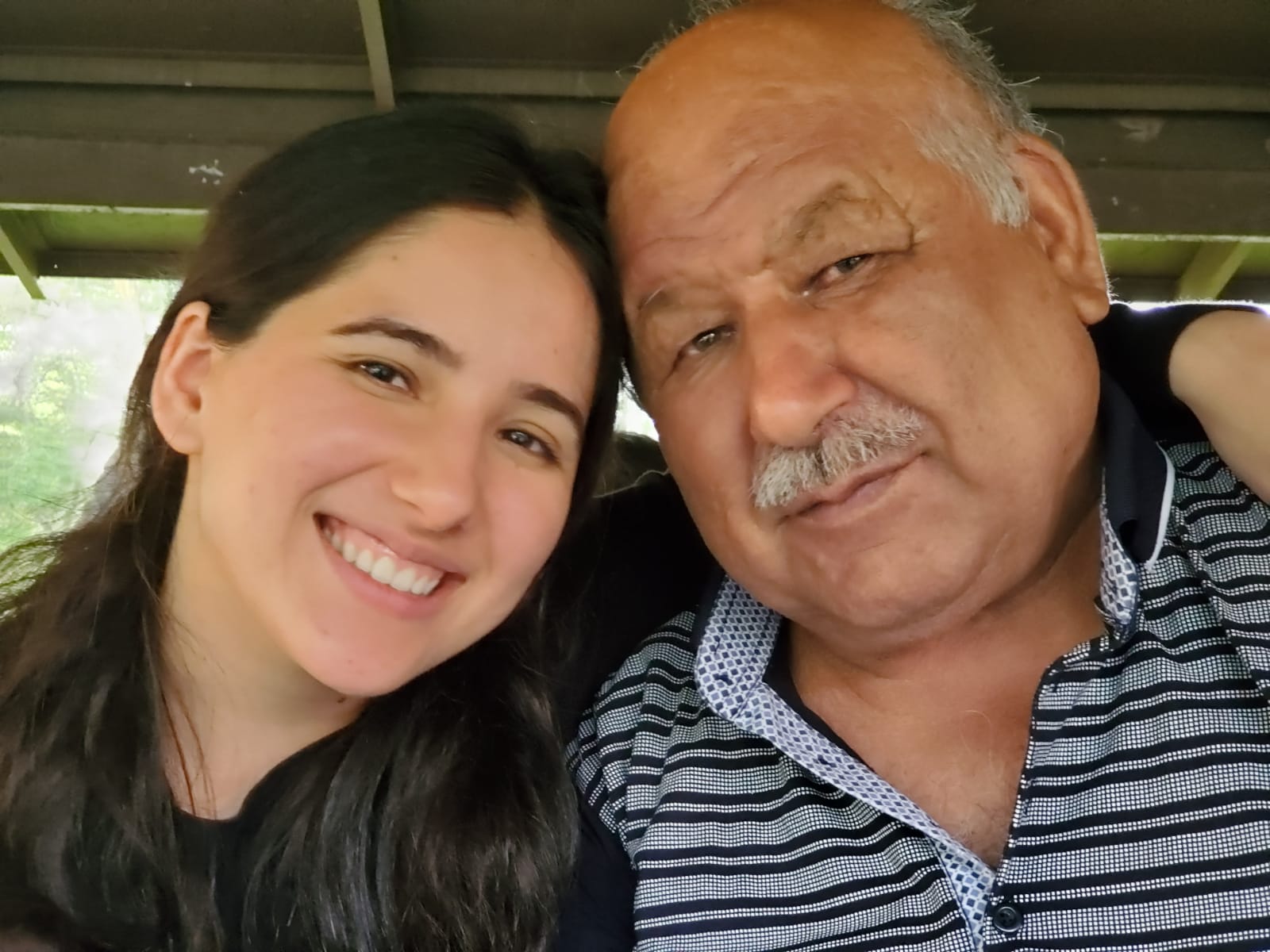
Mursal and her father
Mursal Ashrafi
Founder, care with me
Toronto, Ontario

Mursal Ashrafi is a researcher, designer, and engineer based in Toronto. Her background spans systems thinking, EDI, and community-based research.

If you've been through something similar with your own loved ones and want to contribute to making care with me real, please share your experience with us below.

share your caregiving story
our vision

This is bigger than any one family.

Caregivers do the work that turns healthcare directives into lived outcomes. They remind someone to take their medications. They show them how to use the CPAP machine. They coordinate between specialists who don't talk to each other. The healthcare system delivers a diagnosis, caregivers deliver the care.

"Caregivers hold healthcare systems together, making sure medical directives are followed, appointments are kept, and that care recipients have their needs met."

National Caregiving Strategy, Canadian Centre for Caregiving Excellence (2024)

Most of us stepped into our caregiving roles out of love, a sense of duty, or simply because no one else would. So we don't see an issue with the systemic flaws that we're having to fill: care given freely doesn't need to be asked for, compensated, or acknowledged. And so it hasn't been.

1 in 2
Canadians provided unpaid or paid care in the past 12 months
5.7B
hours of unpaid care work performed in Canada each year
$97–113B
estimated economic value of that unpaid work — unrecognized, uncompensated

The healthcare system, the labour market, and the household economy have all been built on the assumption that someone will absorb the coordination cost of care. That leads us ask:

Who cares, and who doesn't?
Who is forced to care, and who couldn't care less?

These questions are finally reaching the policy agenda.

"Caregiving is the next frontier in Canadian public policy."

National Caregiving Strategy, Canadian Centre for Caregiving Excellence (2024)

care with me begins with one specific practical problem: the coordination cost of care falling entirely on one person. But it points toward something larger — a world where that weight is shared, seen, and no longer silently extracted from the people who absorb it.

If you are a caregiver or someone who works in this space and this resonates with you, join us!

who this is for

For those carrying more than they should.

Here's what that looks like inside one person's head on any given day.

your morning that started before 6am dad's weekly check-in appointment kid's school pick-up at 3:30 prescription refill due Thursday partner's parent's birthday party this weekend specialist referral that hasn't been followed up your own checkup you've been putting off for six months project deadline on Friday the question you forgot to ask at the last appointment mortgage renewal decision mom's medication change — need to tell the next doctor summer camp registration closes this week dad's blood pressure log the plumber you keep meaning to call insurance form from last month, still sitting on the counter your inbox from this morning coordinating between Dr. Singh and the cardiologist parent-teacher interview next Tuesday discharge instructions nobody else read your partner's work thing you promised to remember car's overdue oil change the follow-up nobody scheduled yet

The teal ones are caregiving. The rest is everything else.

How caregivers describe keeping track of medical information:

"I'm retired, I have gotten our finances organized, next step is getting health records organized for both of us. Seems every doctor has different questions on past medical conditions. How do I put together an organized cheat sheet so I don't have to rely on my memory — or for my children if they need to take over someday." — caregiver, Reddit, 2024
"I am usually a very organized person, but am having trouble with how to keep track of symptoms, past appointments, family history, notes during appointments, test results, etc. I feel like I have stuff in 10 different places." — caregiver, Facebook, 2025
"In the last year, I began managing my father's care — organizing insurance, doctors and visits, and moving him to Independent Living. I mostly use Google Drive, but I was wondering what else you use to stay organized?" — caregiver, AgingCare, 2025

These closely reflect our experiences as caregivers. But we want to hear from others.

share your story

What does it look like for you?

We will only use this to reach out for a 20-minute conversation if you'd like. Nothing else.

Currently for Canadian caregivers. Responses are confidential. We read every single one.

care with me is in active development with Canadian caregivers. If you work in caregiving, health equity, or care policy and want to be part of what we're building, we'd love to hear from you!